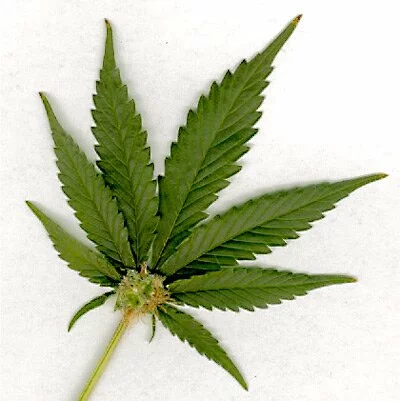
Medical Marijuana
If you’ve been arrested in Michigan for OWI and the charge is based on your use of marijuana, you may be wondering if Michigan’s Medical Marijuana Act applies to your case. The answer is almost certainly “yes,” but before you can understand this answer, you will need to understand a few things about Michigan’s OWI laws. This is because having a Medical Marijuana certificate DOES NOT make it legal to drive under the influence of drugs.
First, you should know that in 1999 Michigan’s drunk driving laws were substantially revised and the principal charge of OWI was thereby created. Since this time, Michigan law has provided several different theories that may be used by the state in any attempt to prove that a driver was OWI. Generally speaking, looking just at drugs, these theories include a variety of “zero tolerance” crimes requiring that the prosecutor show only the mere presence of certain controlled substances. This includes marijuana.
When marijuana is the drug in question, OWPD (Operating with Presence of Drugs) is the appropriate OWI theory in Michigan. This is because marijuana is a schedule I drug. In other words, marijuana is a “zero tolerance” drug, meaning that the prosecutor is relieved of his or her burden to prove intoxication or impairment, and instead needs only to prove, beyond a reasonable doubt, that the marijuana was in fact present in your blood at the time of driving.
Since the medical marijuana act passed in Michigan it is possible to argue that a certificate holder has an affirmative defense and upon raising same, may force the prosecution to prove actual impairment rather than mere presence. However, this issue has yet to been litigated in Michigan’s higher courts. Further, as of the date of this writing there is no case law, published or unpublished, interpreting Michigan’s Medical Marijuana Act. Reportedly there is a case pending in front of the Michigan Court of Appeals challenging the retroactive application of Michigan’s Medical Marijuana Act, but an opinion has not yet been issued.
It should also be noted that Michigan’s Medical Marijuana Act also provides procedures by which a Michigan driver can assert this affirmative defense and be retroactively upon the satisfaction of three elements, including: (1) a physician has stated that the marijuana serves a specified medical purpose[i]; (2) the amount of marijuana possessed (if any) was not more than reasonably necessary to the medical purpose[ii], and; (3) the use of marijuana was to address this medical purpose.[iii]
It would appear that Michigan’s Medical Marijuana Act makes the prosecution of OWI drugs based on the use or presence of marijuana in one’s blood much more difficult than had previously been the case. However, the only safe way to avoid breaking the law is to not use Marijuana at all. Having said this, if you are a Michigan Medical Marijuana certificate holder, it appears that the prosecution must show that you smoked enough marijuana to become intoxicated or impaired.
[i] MCLA § 333.264289(a)(1).
[ii] MCLA § 333.264289(a)(2).
[iii] MCLA § 333.264289(a)(3).

This post was written by...

baronedefensefirm – who has written 204 posts on Michigan Drunk Driving Lawyers.
Patrick T. Barone is the author on two books on DUI defense including the well respected two volume treatise Defending Drinking Drivers (James Publishing), and The DUI Book – A Citizen’s Guide to Understanding DUI Litigation in America. He is also the author of a monthly DUI defense column for the Criminal Defense Newsletter, published by Michigan’s State Appellate Defender’s Office. Mr. Barone is an adjunct professor at the Thomas M. Cooley Law School where he teaches Drunk Driving Law and Practice. He is also on the faculty of the Criminal Defense Attorney’s of Michigan’s Trial Lawyer’s College where he provides trial skills training to Michigan’s criminal defense practitioners. Mr. Barone lectures nationally on various DUI defense topics, and he has appeared in newspapers, on television and on radio as a drunk driving defense expert. Mr. Barone has been certified as an instructor and practitioner of the Standardized Field Sobriety Tests and has also attended a 24-hour certification course at National Patent Analytical Corporation (the manufacturer of the DataMaster) and has thereby been deemed competent by the manufacturer to operate, perform essential diagnostic verifications and calibration checks on the DataMaster. Mr. Barone is a Sustaining Member of College for DUI Defense. Mr. Barone is the principal and founding member of The Barone Defense Firm, whose practice is limited exclusively to defending drinking drivers. The Firm is headquartered in Birmingham, Michigan.
{ 5 comments… read them below or add one }