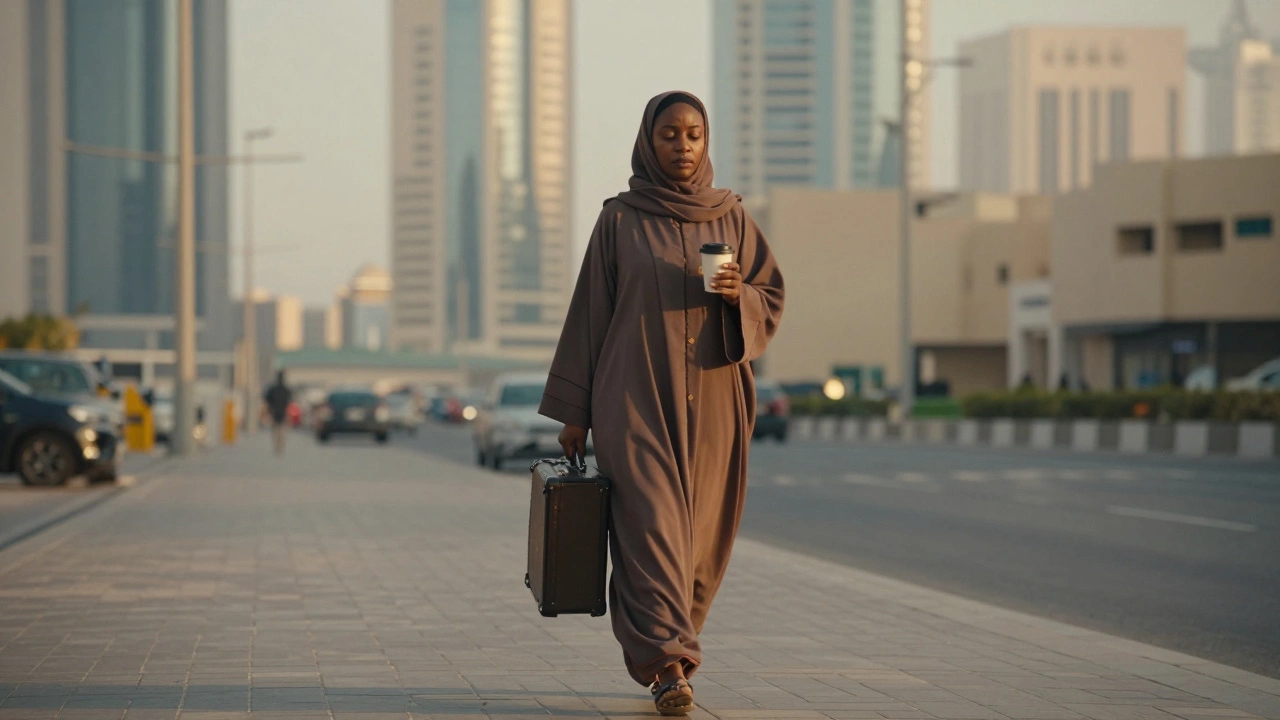
Every year, thousands of Nigerian women arrive in Dubai seeking opportunity. Some come with student visas. Others arrive on tourist permits, hoping to find work in hospitality, retail, or domestic service. But a small fraction enter a different world-one where survival is tied to intimate labor. The term "escort girl Dubai" is often used in online searches, but behind that phrase are real people navigating complex systems of migration, gender, and economic pressure. These women aren’t stereotypes. They’re mothers, sisters, daughters who made choices under conditions most of us can’t imagine.
Some of them connect with clients through apps or private networks. A few mention platforms that list services under coded language. One woman in Deira told me she was referred to a contact who introduced her to twink escort dubai clients, not because she wanted to, but because rent was due and her visa was running out. She didn’t identify as an escort. She called herself a companion. The line between companionship and transaction blurs quickly when you’re 22, alone, and your bank account shows zero.
Why Dubai? Why Nigeria?
Nigeria has over 200 million people. More than half are under 25. Unemployment among young women is above 30% in urban areas. Meanwhile, Dubai’s economy runs on foreign labor-construction workers from South Asia, nurses from the Philippines, cleaners from Bangladesh. But there’s also a quieter layer: women from West Africa who fill gaps no official system acknowledges. They don’t appear in labor statistics. They don’t get work permits. Their income is cash, untraceable, survival-based.
Why Dubai? Because it’s close. Because visas are easier to get on tourist papers than work visas. Because the city doesn’t ask too many questions if you’re quiet, clean, and keep to yourself. A Nigerian woman might arrive with a return ticket booked for three months. She stays six. Then twelve. Then longer. She learns Arabic phrases. She buys a abaya. She learns how to nod at security guards without making eye contact. She becomes invisible in plain sight.
The Roles They Play
Not every Nigerian woman in Dubai doing intimate work identifies as an escort. Some call themselves models. Others say they’re event hosts. A few say they’re language tutors. One woman I spoke with said she gave English lessons to Emirati men-"but sometimes they wanted to talk about other things after." She didn’t say no. She didn’t say yes. She just did what she needed to do.
The clients vary. Some are local Emiratis who want discretion. Others are expats from Europe or Asia. A few are wealthy Gulf nationals who treat these encounters as part of their social calendar. There’s a market for every type. That’s where terms like "dubai arab escort" and "eurogirls dubai escort" come from. They’re not just labels-they’re categories in a hidden economy. One woman told me she made more in a single night with a European client than she would in two weeks cleaning hotel rooms. She didn’t feel proud. She felt exhausted.

Legal Reality and Social Stigma
Dubai has strict laws. Prostitution is illegal. Foreigners caught in these activities face deportation, fines, or jail. Nigerian women are among the most deported groups from the UAE for visa violations. But enforcement is selective. If you’re polite, pay your rent, don’t cause trouble, and keep your door locked, the police rarely knock. The system turns a blind eye as long as nothing disrupts the surface.
Back home in Lagos or Port Harcourt, families hear rumors. A daughter went to Dubai to study. She sends money. She calls once a month. She says she’s fine. No one asks what "fine" means. The shame is too heavy. A mother in Enugu told me she stopped answering calls from Dubai numbers. "I don’t want to know," she said. "If she’s alive, that’s enough."
Who Benefits?
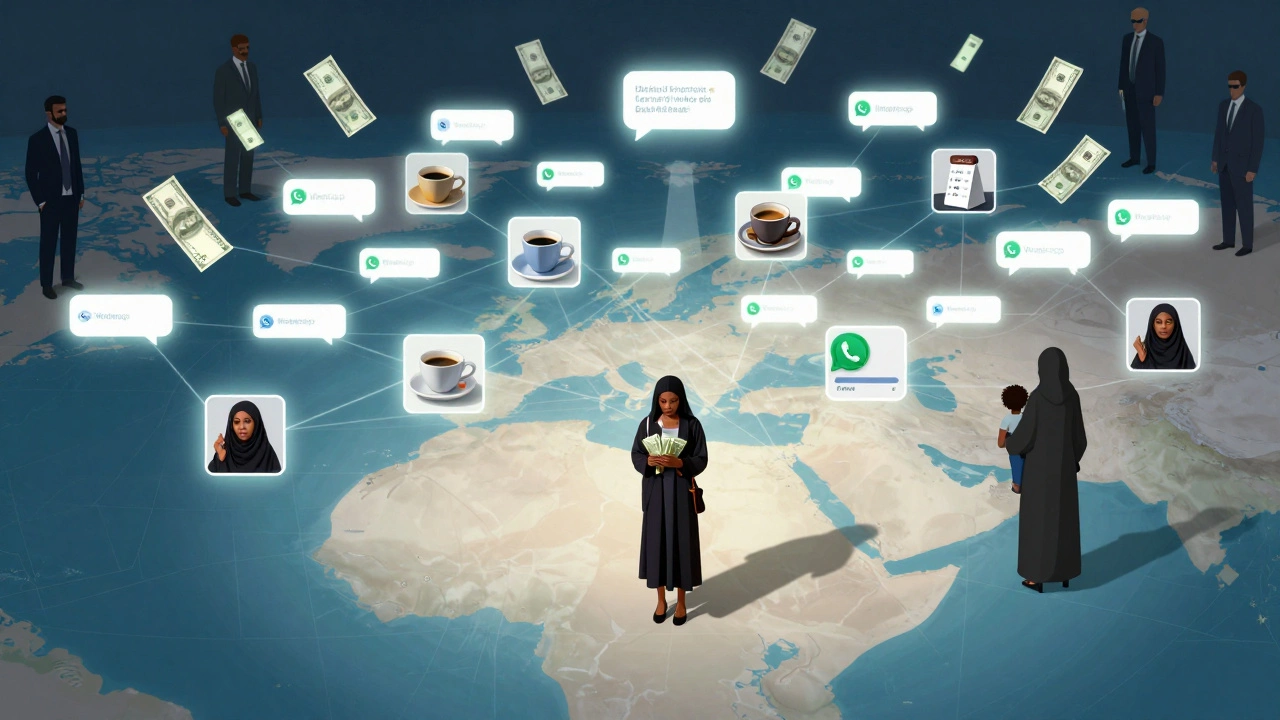
The money flows upward. A Nigerian woman might earn $500 in a week. But $300 of that goes to a fixer who arranged her visa, her apartment, her first client. Another $100 goes to a local driver who picks her up and drops her off. Another $50 to a phone card, a SIM, a data plan. She might take home $50. That’s still more than her job in Nigeria paid. So she stays.
Meanwhile, the businesses that profit most are rarely visible. There are no storefronts. No logos. No websites you can find on Google. But there are WhatsApp groups. Telegram channels. Private Instagram accounts with coded posts. One woman showed me a screenshot of a post that said: "New arrival, fluent in English and French, available for private gatherings." The photo was of a woman in a white dress, smiling, holding a coffee cup. No names. No numbers. Just a location: "Jumeirah Beach."
The Women Who Leave
Not everyone stays. Some save enough to open a small shop back home. One woman I met in Abuja now runs a boutique selling Nigerian lace. She told me she saved $12,000 in two years in Dubai. She paid off her brother’s school debt. She bought her mother a car. She doesn’t talk about how she got the money. Her customers don’t ask. She says her business is "imported fashion."
Others don’t make it out. Some get sick. Some get arrested. A few disappear. Their names show up on Nigerian embassy lists as "missing persons." No one knows if they went home, or if they’re buried in a desert grave.
What’s Missing From the Conversation
We talk about trafficking. We talk about exploitation. We talk about crime. But we rarely talk about agency. These women aren’t passive victims. They’re calculating, resilient, resourceful. They choose the least bad option. They negotiate prices. They set boundaries. They learn to say no. They find ways to protect themselves. One woman carried a fake pregnancy test in her purse. Another kept a burner phone with a fake boyfriend’s number. She’d call it when a client got too rough. "He’d hear me say, ‘Honey, I have to go. My husband’s here.’ And he’d leave," she said.
The truth is, this isn’t about morality. It’s about survival. It’s about a system that offers no safety net, no social security, no unemployment benefits. When you’re from a country where your government can’t pay your salary, and your family depends on you, you do what you must.
There’s no easy solution. Crackdowns just push the work further underground. Legalization isn’t on the table-Dubai doesn’t regulate sex work, and Nigeria doesn’t protect its women abroad. So the women keep working. They keep sending money. They keep hoping.
Next time you hear "escort girl Dubai," think less about the label and more about the life behind it. Think about the woman who woke up before dawn to clean a hotel room, then changed into a dress and went to a hotel room for a different kind of work. Think about the fact that she still had to pay for her own shampoo, her own bus fare, her own food. Think about the fact that she didn’t ask for your pity. She just asked to be left alone.

Caspian Nettleton
Hi, I'm Caspian Nettleton, a political expert with a passion for analyzing and writing about media. With years of experience in both fields, I've developed a deep understanding of the complex relationship between politics and the media landscape. I enjoy dissecting political campaigns, analyzing media bias, and exploring the impact of emerging technologies on the political arena. Writing about these topics allows me to share my insights and contribute to the ongoing conversation about the role of media in shaping public opinion and political outcomes.